Tree Limb Removal Santa Rosa
Tree Limb Removal in Santa Rosa for Overhanging, Dead & Hazardous Branches
SRT Forestry provides tree limb removal in Santa Rosa, CA for homeowners and property owners dealing with branches that are dead, overhanging a structure, too close to a power line, or just too heavy to leave where they are. Sometimes the whole tree doesn't need to come down — just a specific limb or set of limbs that are causing a problem.
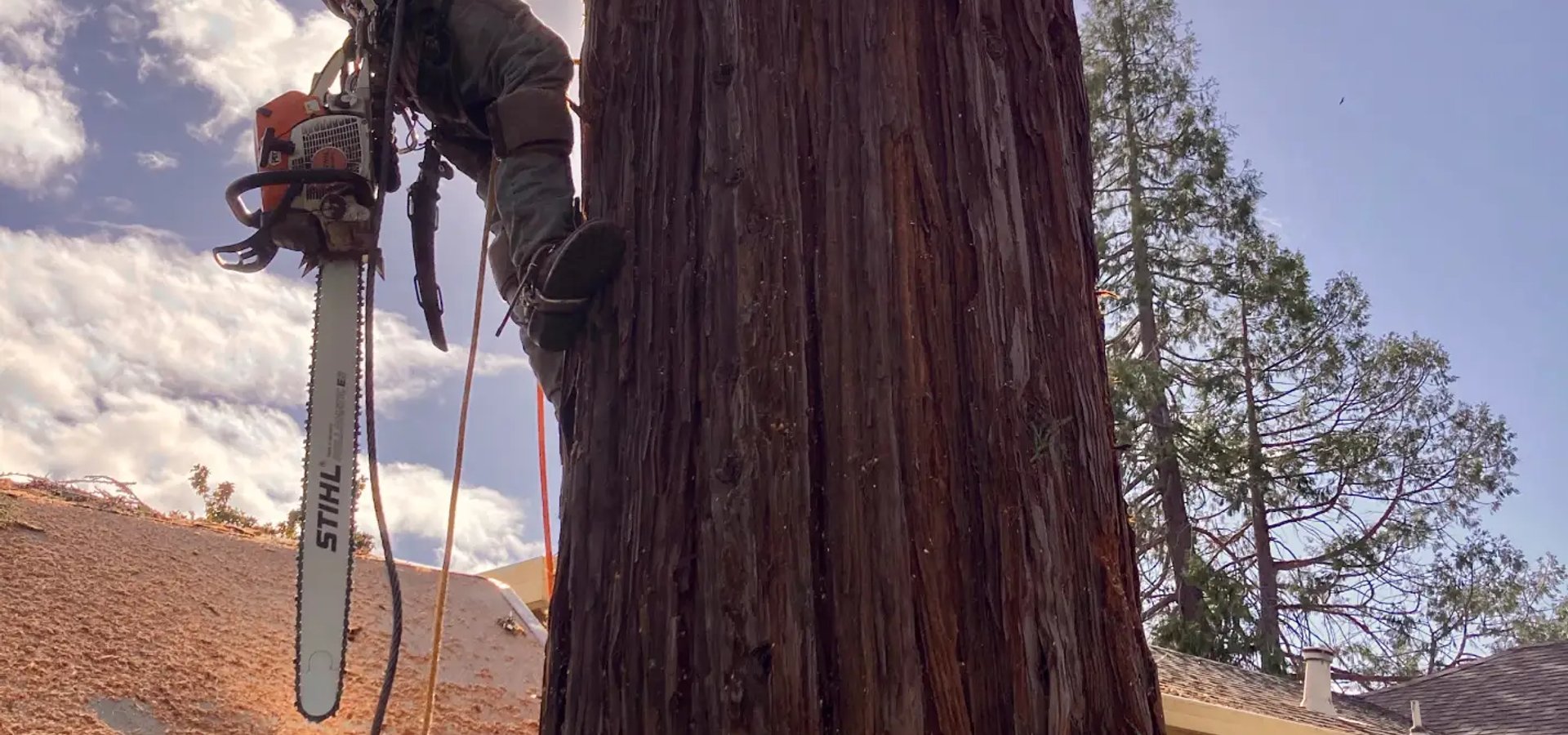
Limb removal is more precise work than full tree cutting. Getting a large branch out of a tree without damaging the canopy, the trunk, or whatever is below it takes planning and the right rigging. We control how each limb comes down so there's no guessing about where it lands — especially important when it's hanging over a roof, fence, vehicle, or neighboring property.
- Dead and dying limbs dropping on their own timeline
- Overhanging branches above roofs, patios, and vehicles
- Limbs growing into power lines or utility infrastructure
- Large co-dominant limbs with weak or splitting unions
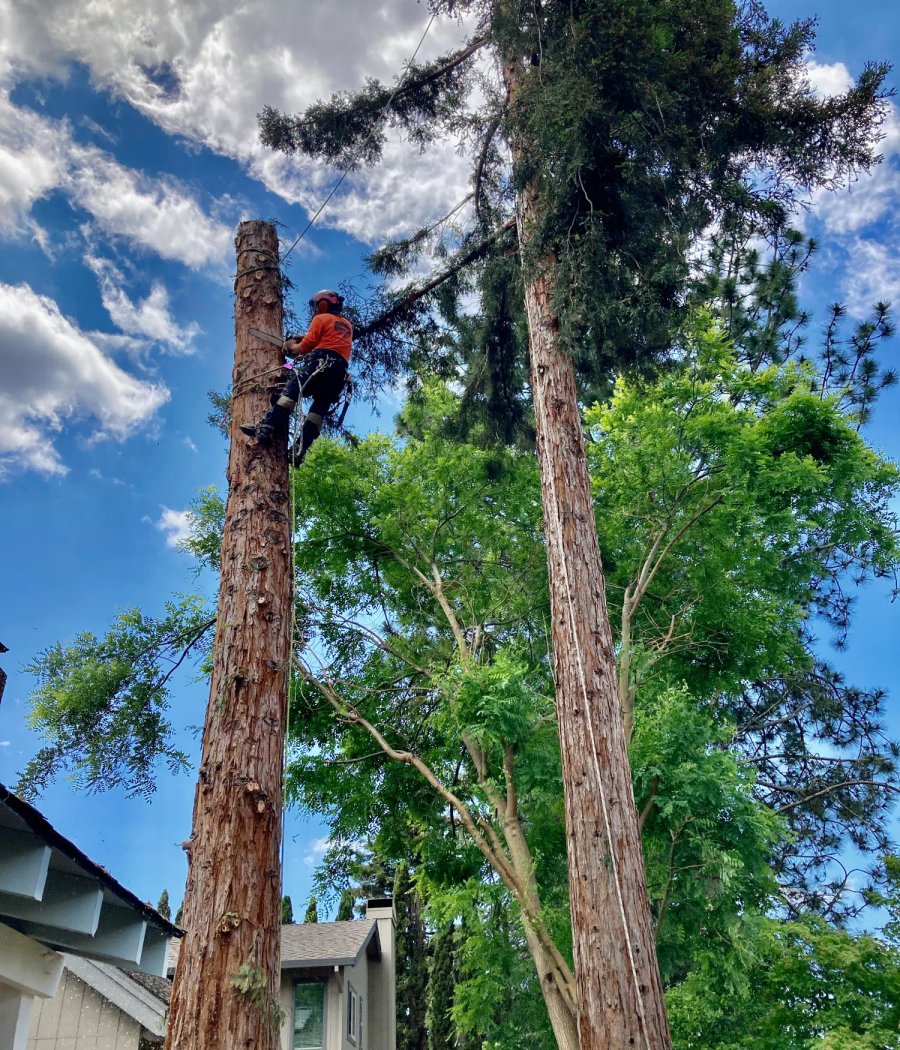
A Dead Limb Will Come Down — The Question Is When
Dead branches don't stay up forever. Wind, rain, or just the weight of the wood will bring them down. Getting it removed on your schedule is a lot better than dealing with the damage after.
Tree Limb Situations We Handle in Santa Rosa & Sonoma County
Not all limb removal jobs are the same. The size, location, and condition of a branch all affect how we approach the work.
Dead & Dying Limbs
Dead wood dries out and loses the flexibility that keeps branches intact during wind and storms. These limbs can drop unexpectedly and without much warning. If there are several dead limbs throughout the canopy, tree pruning may be the more efficient approach.
Limbs Over Roofs & Structures
Branches growing directly over a roofline, garage, patio cover, or outbuilding are a real risk. Even a healthy limb that's heavy enough can cause damage if it comes down in a storm. We rig and lower these so they don't land on what's below.
Low Canopy & Fire Ladder Limbs
Branches that hang low to the ground create fire ladders — pathways that let ground fire climb up into the tree canopy. Removing low limbs is a standard part of fire prep and works alongside defensible space clearing.
Co-Dominant & Splitting Limbs
Two large limbs growing from the same attachment point with a weak or included bark union are prone to splitting. These are especially common in oaks. If the union looks structurally questionable, we can also evaluate whether cabling and bracing is a better solution than removal.
Storm-Broken Limbs
A partially broken limb hanging in a tree is called a widow-maker for good reason. These need to come out fast. If the damage is more widespread across the tree, see our storm damage tree service for the full picture.
Encroaching Limbs
Branches growing onto a neighbor's property, blocking a driveway, or rubbing against a structure can become a recurring issue. We remove the limb at the right cut point to discourage regrowth and avoid leaving a stub that invites decay.

Limb Removal Requires the Right Cut in the Right Place
Before removing any limb, we look at where it connects to the tree, how heavy it is, what's underneath it, and whether the cut location will affect the rest of the canopy. Cutting a large branch incorrectly — leaving a long stub, cutting flush with the trunk, or cutting at the wrong angle — can open the tree up to decay and cause long-term damage. We make the right cut at the branch collar so the tree can close over the wound properly.
For large limbs over structures, we use rigging to control the descent. That means the branch comes down in sections on a rope — not in a free fall toward your roof. If after looking at the tree it becomes clear that the overall canopy structure is the issue rather than one problem limb, we may suggest tree pruning or crown reduction instead.
- Limb assessment: We check the attachment, condition, and weight of the branch before deciding how to remove it.
- Rigging for overhead limbs: Large limbs above structures come down on rope, not in a drop.
- Proper cut placement: We cut at the branch collar — not flush, not with a long stub.
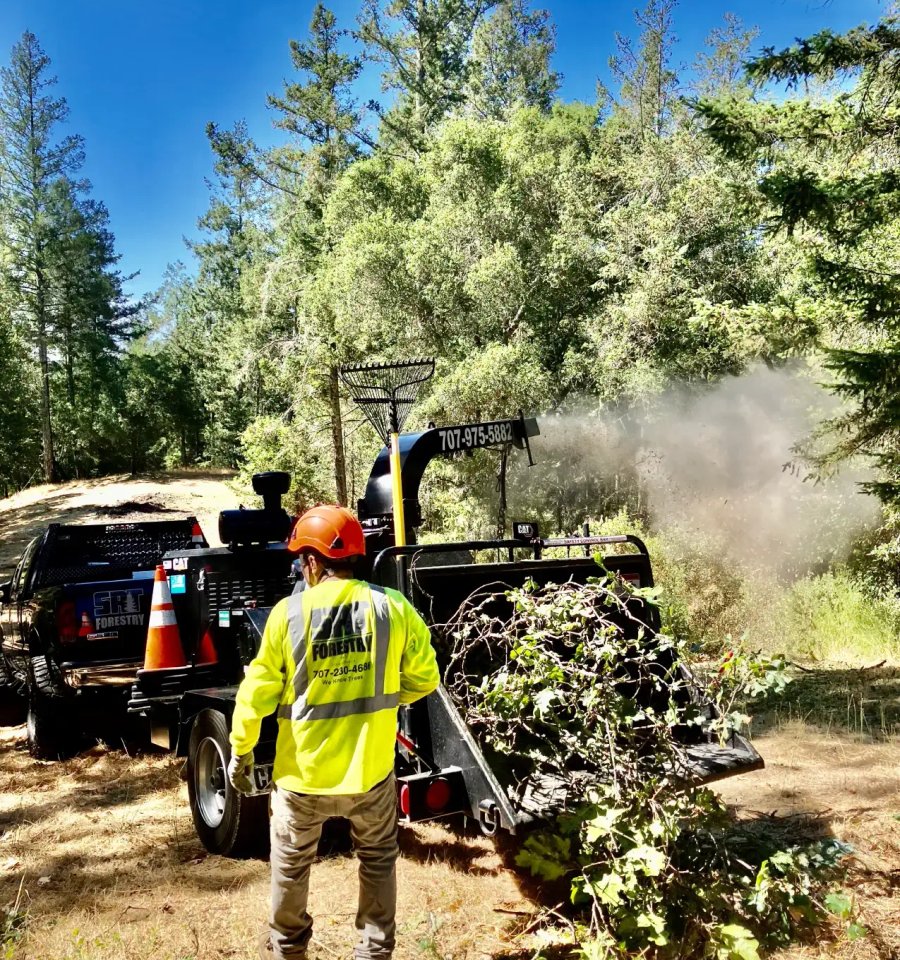
- Full cleanup: Every limb we remove gets chipped or hauled — nothing left behind.
Have a limb that needs to come down in Santa Rosa or Sonoma County? Call SRT Forestry for a free estimate.
Call NowTree Limb Removal Questions in Santa Rosa
Common questions from homeowners dealing with problem branches and overhanging limbs in Santa Rosa and Sonoma County.
How do I know if a limb needs to be removed versus pruned?
Limb removal is the right call when a specific branch is dead, structurally compromised, hanging over something valuable, or creating a hazard on its own. Pruning is more appropriate when you're dealing with overall canopy shape, multiple smaller branches, or general tree health maintenance. If you're unsure, we can look at the tree and tell you what makes sense.
Can you remove a limb that's hanging over my neighbor's yard?
Yes. We work in tight situations and can rig the limb so it comes down on your side of the property line. It's worth knowing that in California, a neighbor is generally entitled to trim branches that cross the property line — but removing a large limb from the tree itself is work that should be done by the tree owner with a professional crew.
Is limb removal bad for the tree?
Not when it's done correctly. Removing a dead, diseased, or structurally weak limb is actually better for the tree's long-term health. The key is making the cut at the right location — at the branch collar — so the tree can compartmentalize the wound and seal over it. Improper cuts, like flush cuts or long stubs, are what cause decay problems.
What if the limb is too big for me to tell if it's actually a problem?
That's exactly what a site visit is for. We'll look at the branch, check the attachment point, look for cracks, decay, or dead wood, and give you a straight answer on whether it needs to come out now, can wait, or if a different approach — like cabling and bracing — makes more sense for that particular limb.
Tree Limb Removal and Related Tree Services
Need help with another tree service? SRT Forestry serves Santa Rosa and nearby Sonoma County communities.
- Tree Service
- Arborist Service
- Tree Removal
- Tree Stump Removal
- Tree Stump Grinding
- Emergency Tree Service
- Tree Trimming
- Tree Pruning
- Hazardous Tree Removal
- Storm Damage Tree Service
- Fire Hazard Tree Removal
- Defensible Space
- Lot Clearing
- Brush & Debris Removal
- Vegetation Management
- Tree Cutting
- Tree Crown Reduction
- Crown Thinning
- Tree Cabling & Bracing
- Tree Root Removal
- Shrub Removal & Pruning
- Residential Tree Service
- Commercial Tree Service
- Small Tree Removal
- Large Tree Removal
- Line Clearing