
Tree Diagnosis Santa Rosa
Tree Diagnosis in Santa Rosa for Sick, Stressed, Damaged & Declining Trees
SRT Forestry provides tree diagnosis in Santa Rosa, CA for property owners who can tell something is wrong with a tree but are not sure what caused it. Yellow leaves, dead branches, thin canopy, bark damage, mushrooms, poor growth, cracking limbs, and sudden leaf drop can all point to different problems. Some are easy to fix. Others need fast action before the tree gets worse.
We look at the whole tree and the site around it. A tree problem is not always caused by insects or disease. In Sonoma County, we often see trees stressed by drought, poor watering, root damage, compacted soil, construction work, over-pruning, fire damage, drainage changes, or old storm damage. The right diagnosis helps avoid guessing and wasting money on the wrong fix.
Our job is to find the most likely cause, explain it clearly, and give you a practical next step. That may mean pruning, soil care, root work, watering changes, monitoring, deadwood removal, or removal if the tree is too far gone. We keep the advice simple, honest, and based on what we see on your property.
- Diagnosis for yellowing leaves, dieback, dead limbs, and thin canopies
- Inspection for root stress, trunk damage, poor structure, and decay signs
- Local experience with oaks, redwoods, firs, pines, eucalyptus, and ornamentals
- Clear recommendations for care, pruning, monitoring, or removal
The Same Symptom Can Have Different Causes
Yellow leaves can mean drought stress, root damage, drainage issues, disease, or soil problems. A diagnosis helps find the real issue before the tree declines further.
What We Look For During a Tree Diagnosis
Tree problems usually come from more than one thing. We check the tree, roots, soil, water, surrounding landscape, and recent changes on the property.
Leaf Yellowing & Canopy Thinning
Yellow leaves, early leaf drop, and a thin canopy can be signs of water stress, root damage, poor soil, disease, or normal seasonal change depending on the tree. We compare the leaf symptoms with branch growth, site conditions, and recent weather before recommending care. For a deeper condition review, see our tree health assessment service.
Dead Branches & Dieback
Dead limbs can come from old storm damage, drought stress, shaded-out branches, pests, disease, or a tree that is starting to decline. Some deadwood can be safely removed with deadwood removal, but heavy dieback through the whole canopy may point to a larger health or root problem.
Trunk Damage, Cracks & Decay
Open wounds, cracks, cavities, soft wood, and mushrooms near the trunk can mean decay is present. Not every cavity makes a tree unsafe, but decay near the base or main stem can raise concern. If the tree may threaten a home, road, or driveway, we may recommend a tree risk assessment.
Root Stress & Soil Problems
Roots are often the real issue when a tree is declining. Compacted soil, trenching, grade changes, overwatering, poor drainage, and cut roots can all hurt the tree even when the damage is not visible at first. If roots are part of the issue, future root management may be needed.
Insects, Disease & Fungal Signs
Boring dust, leaf spots, cankers, mushrooms, bleeding bark, and unusual growths can point to pest or disease activity. We inspect the visible symptoms and help decide whether the tree needs monitoring, pruning, sanitation, or a more focused tree disease diagnosis.
Recent Site Changes
Trees often decline after changes around them. New construction, driveway work, irrigation changes, soil added over roots, hardscape installation, or heavy equipment can stress a tree months before symptoms show. For larger property changes, our site evaluation service can help review the growing conditions around the tree.


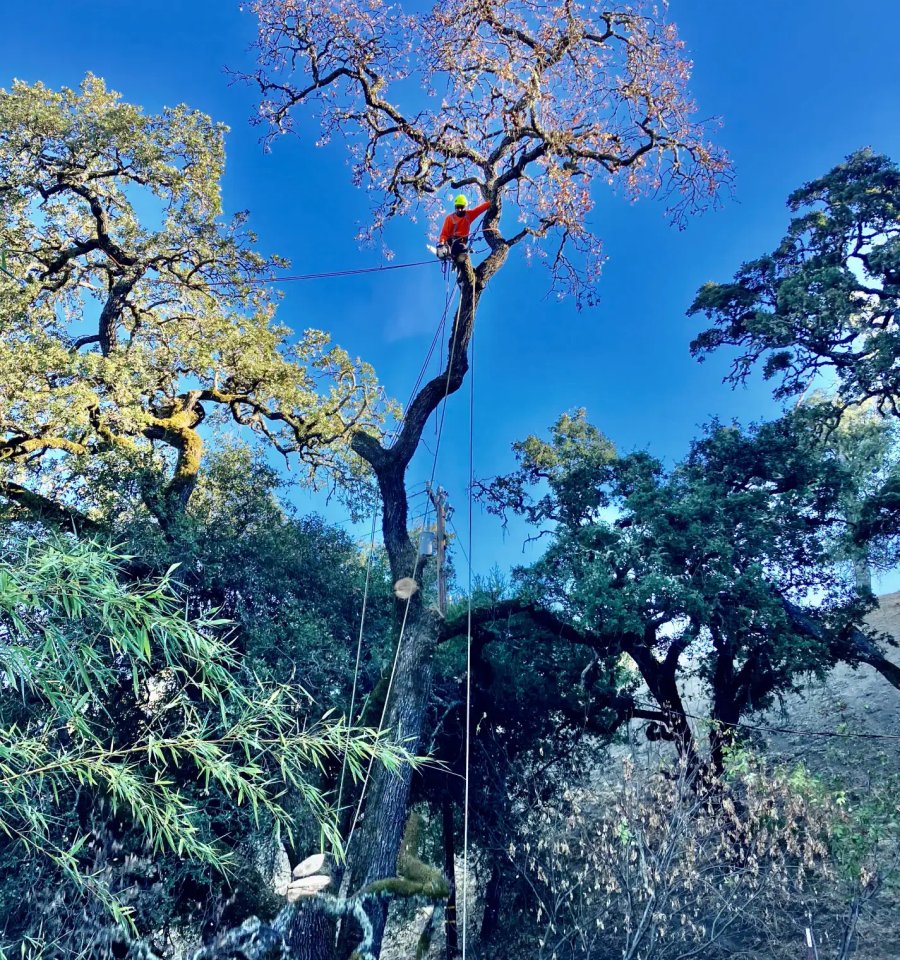
We Start With the Tree, Then Look at the Growing Conditions Around It
When a tree looks sick, the first step is to slow down and look at the whole picture. We check the leaves, branches, trunk, root flare, soil, irrigation, slope, drainage, and nearby changes. A tree may show symptoms in the canopy, but the problem often starts below ground or from stress that happened months earlier.
After the diagnosis, we explain the likely cause and the best next step. If the tree can recover, we may recommend pruning, mulch, watering changes, root zone care, or monitoring. If the tree has serious decay, heavy dieback, or a weak structure, we may suggest removal or another arborist service. For trees worth protecting during construction or property changes, our tree preservation planning service can help.
- Visible symptoms: We check leaves, bark, branches, canopy density, and deadwood.
- Root zone review: We look for soil compaction, root damage, grade changes, and drainage problems.
- Site history: We ask about storms, construction, irrigation changes, pruning, and recent landscape work.
- Plain explanation: We explain what is likely happening without making it confusing.
- Practical next step: We recommend care, pruning, monitoring, further inspection, or removal when needed.
Have a tree that looks sick, thin, damaged, or different than it used to? Call SRT Forestry for tree diagnosis in Santa Rosa or Sonoma County.
Call NowTree Diagnosis Questions in Santa Rosa
Common questions from homeowners and landowners when a tree starts showing signs of stress, damage, or decline.
Why are my tree's leaves turning yellow?
Yellow leaves can be caused by drought stress, too much water, poor drainage, soil problems, root damage, pests, disease, or normal seasonal changes. The cause depends on the tree species, time of year, soil moisture, and what the rest of the tree looks like. We check the whole tree and root area before making a recommendation.
Can a sick tree recover?
Sometimes, yes. If the tree still has a strong structure and the stress can be corrected, it may recover with proper care. If the tree has major decay, severe dieback, root failure, or a serious trunk defect, recovery may not be realistic. The diagnosis helps separate trees that can be saved from trees that are becoming unsafe.
Do dead branches mean the whole tree is dying?
Not always. Some dead branches are normal, especially inside a shaded canopy. But large dead limbs, dieback at the top, or dead branches spreading through the tree can point to stress or decline. Dead branches over homes, driveways, or walkways should be removed even if the rest of the tree is still healthy.
When should I call for tree diagnosis?
Call when you see sudden changes, heavy leaf drop, dead limbs, bark peeling, mushrooms, cracks, poor growth, or a tree that looks much thinner than normal. It is also smart to call after construction, trenching, major pruning, fire damage, or storm damage near an important tree.
Tree Diagnosis and Related Services
Need help with another tree or arborist service? SRT Forestry serves Santa Rosa and nearby Sonoma County communities.