
Deadwood Removal Santa Rosa
Deadwood Removal in Santa Rosa for Oaks, Redwoods, Pines & Mature Trees
SRT Forestry provides deadwood removal in Santa Rosa, CA for trees with dead, broken, hanging, or declining branches. Dead limbs are common in mature trees, especially after drought, storms, heat, poor pruning, disease, or years without maintenance. The problem is that dead branches do not stay attached forever. They can fall onto roofs, cars, fences, driveways, patios, roads, and walkways.
We remove deadwood carefully without stripping the tree or making unnecessary cuts. The goal is to reduce risk while keeping the tree as healthy and natural as possible. This is especially important for mature oaks in Bennett Valley, Rincon Valley, Oakmont, Fountaingrove, Wikiup, and rural properties around Mark West Springs, where large dead limbs can sit high in the canopy and be hard to see from the ground.
Deadwood removal is also useful before fire season, after winter storms, before selling a property, or when a tree hangs over a high-use area. If the dead branches are part of a larger decline, we may recommend a tree health assessment or tree risk assessment to understand what is causing the problem.
- Removal of dead, broken, hanging, and unsafe branches
- Deadwood cleanup for oaks, redwoods, pines, firs, eucalyptus, and mature trees
- Helpful for trees over homes, driveways, roads, patios, fences, and walking areas
- Careful pruning that reduces risk without over-cutting the tree
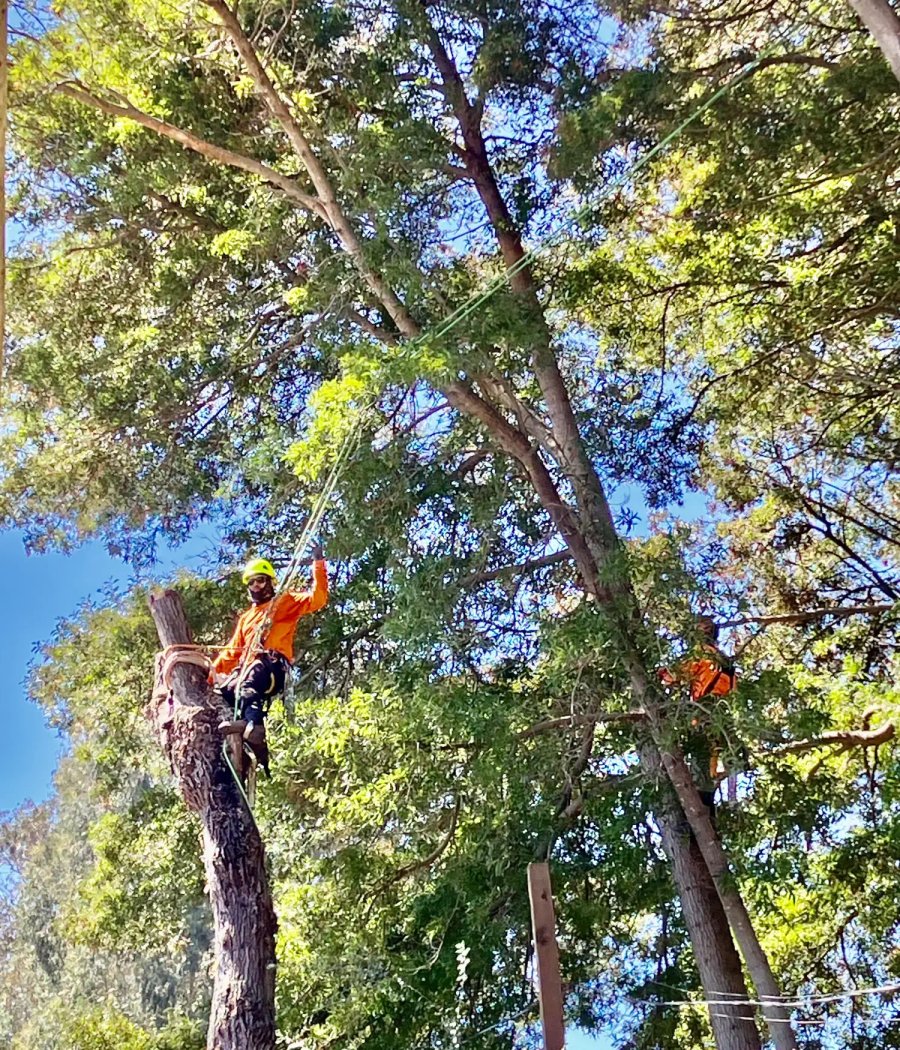
Deadwood Gets More Brittle the Longer It Sits
Dead branches dry out, crack, and weaken over time. Removing them early helps reduce falling limb risk and keeps the tree easier to manage.
When Deadwood Removal Makes Sense for Santa Rosa Trees
Dead branches are not always an emergency, but they should be checked when they hang over people, structures, roads, or anything you do not want damaged.
Dead Branches Over Homes and Roofs
Dead limbs over a roof, deck, garage, or patio should not be ignored. Even a medium-sized branch can damage shingles, gutters, skylights, fencing, or outdoor furniture. We remove the deadwood while protecting the roof and nearby landscaping as much as possible.
Dead Limbs Over Driveways and Roads
Branches over driveways, private roads, and access routes are a concern in neighborhoods like Rincon Valley, Fountaingrove, Oakmont, and rural Sonoma County. If a limb falls where cars, delivery trucks, or emergency vehicles pass, it can block access or cause damage. For access issues, line clearing may also help.
Fire Season Tree Cleanup
Dead branches add dry fuel to the property, especially when they hang low or drop into brush and leaf litter. Deadwood removal can be part of a broader fire-season cleanup plan. For larger defensible space needs, see our defensible space and vegetation management services.
Storm-Damaged and Hanging Branches
Winter storms can leave cracked limbs, broken hangers, and dead branches stuck in the canopy. These can fall later when the wind picks up again. If your tree has fresh storm damage, storm damage tree service may be needed along with deadwood removal.
Deadwood in Mature Oaks
Mature oaks naturally develop some deadwood, but heavy dead limbs or dieback near targets should be handled carefully. We remove what needs to come out without over-thinning the oak. For older native trees, our oak tree care service can help with long-term care.
Deadwood From Tree Decline
When deadwood keeps increasing, the tree may have a deeper issue. Drought, root damage, decay, disease, or soil stress can all cause dieback. If the deadwood is part of a larger health concern, tree diagnosis can help identify the cause.


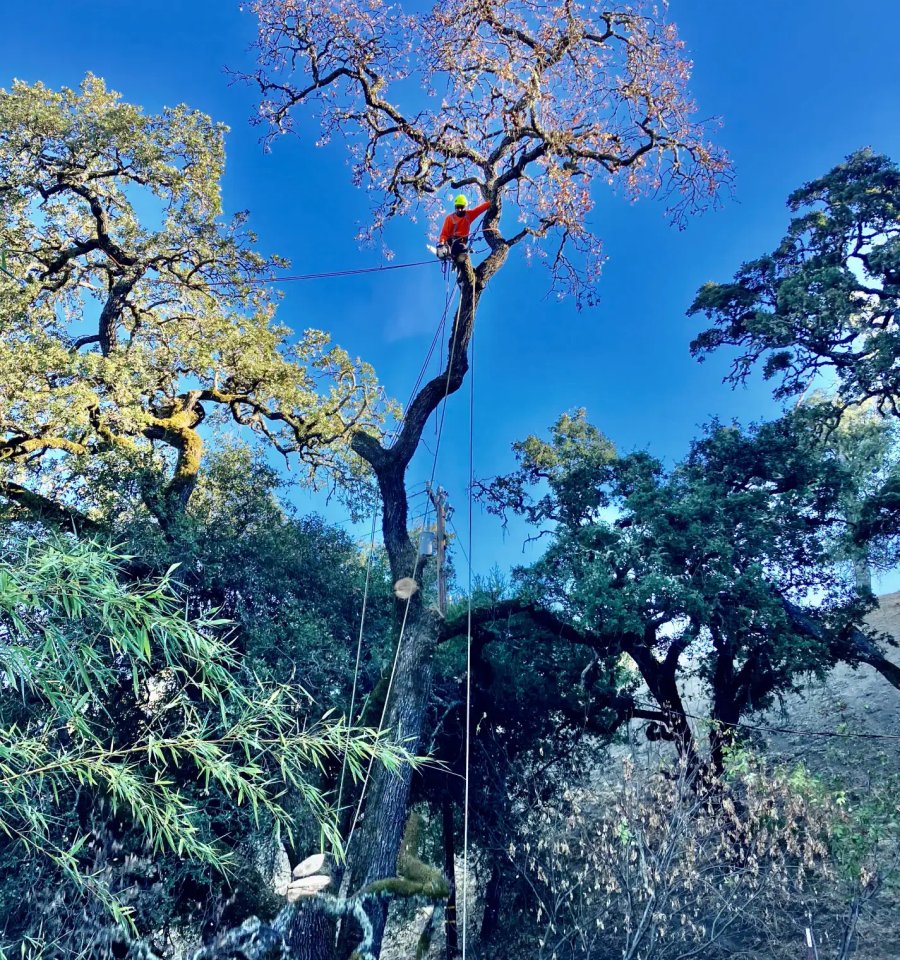
We Remove Deadwood Without Over-Pruning the Tree
Good deadwood removal is selective. We do not just cut everything out because a tree looks messy. We identify dead, broken, cracked, or hanging limbs, then decide what should be removed based on safety, tree health, and the area below. A dead limb over open ground is different from a dead limb over a roof, play area, sidewalk, or driveway.
We also watch for the reason the deadwood is there. A few dead branches may be normal. Heavy canopy dieback, dead tops, soft wood, mushrooms, or cracks may point to disease, root trouble, or structural risk. When needed, we may recommend tree inspection or tree disease diagnosis before or after removing dead branches.
- Canopy review: We identify dead, broken, cracked, hanging, and high-risk limbs.
- Target review: We look at what sits below the branches, including homes, roads, fences, patios, and cars.
- Careful cuts: We remove deadwood without stripping healthy canopy or making rough cuts.
- Health clues: We watch for decay, disease, root stress, and patterns of decline.
- Cleanup: We remove or process debris so the property is left clean and usable.
Have dead branches over your home, driveway, fence, patio, or walking area? Call SRT Forestry for deadwood removal in Santa Rosa or Sonoma County.
Call NowDeadwood Removal Questions in Santa Rosa
Common questions from Santa Rosa property owners about dead branches, falling limbs, mature tree cleanup, and tree safety.
Does deadwood mean my tree is dying?
Not always. Many mature trees have some deadwood, especially older oaks and large shade trees. The concern is how much deadwood there is, where it is located, and whether it is increasing. Heavy dieback or dead limbs throughout the canopy may point to a health problem.
When should dead branches be removed?
Dead branches should be removed when they hang over homes, driveways, sidewalks, patios, roads, fences, or areas people use often. They should also be checked after storms, before fire season, or when a tree starts dropping limbs more often than normal.
Can deadwood removal hurt the tree?
Deadwood removal should not hurt the tree when done correctly. The problem comes from over-pruning, cutting into healthy tissue, or removing too much live canopy at the same time. We focus on removing dead and unsafe limbs while keeping the tree stable.
Is deadwood removal the same as tree pruning?
Deadwood removal is a type of pruning, but it focuses on dead, broken, or unsafe branches. Regular tree pruning may also include structure, clearance, weight reduction, or crown work. Deadwood removal is often the first step when the main concern is falling limbs.
Deadwood Removal and Related Services
Need help with another tree or arborist service? SRT Forestry serves Santa Rosa and nearby Sonoma County communities.