

Tree Risk Assessment Santa Rosa
Tree Risk Assessment in Santa Rosa for Unsafe, Leaning, Damaged & Declining Trees
SRT Forestry provides tree risk assessment in Santa Rosa, CA for homeowners, landowners, and property managers who are worried about a tree near a house, driveway, road, fence, power line, or high-use area. A tree does not have to be dead to be dangerous. Some trees fail because of weak branch unions, hidden decay, root problems, storm damage, poor structure, or soil movement around the base.
Our goal is simple: look at the tree, explain the risk in plain language, and help you decide what needs to happen next. Sometimes the answer is pruning. Sometimes the tree needs support, clearance, monitoring, or full removal. We do not try to scare people into unnecessary work, but we also do not ignore real hazards when a tree has signs of failure.
In Santa Rosa and Sonoma County, tree risk matters because many properties have mature oaks, redwoods, firs, eucalyptus, pines, and hillside trees growing close to homes and access roads. Wind, drought stress, saturated winter soil, and fire damage can all change how safe a tree is. A proper assessment helps catch problems before they turn into emergency tree work.
- Assessment for leaning, cracked, dead, or storm-damaged trees
- Tree risk review near homes, roads, fences, driveways, and power lines
- Plain-language recommendations for pruning, support, monitoring, or removal
- Local tree knowledge for Santa Rosa and Sonoma County properties
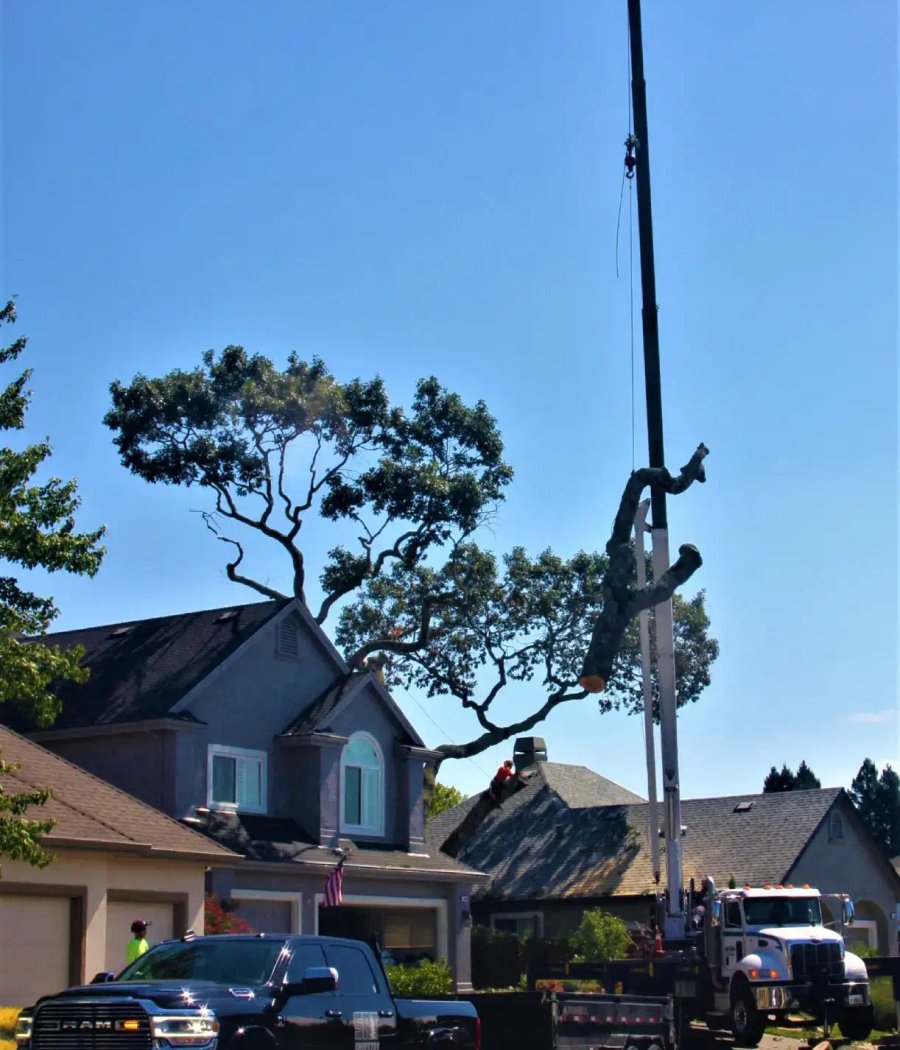
A Risk Assessment Helps You Make the Right Call
Cracks, dead limbs, sudden leaning, mushrooms near the base, and broken tops are all signs worth checking. A quick look now can prevent a much bigger problem later.
Tree Risk Factors We Check on Santa Rosa Properties
Every tree is different. We look at the whole tree, the site around it, and what could be damaged if the tree or a large limb failed.
Dead, Dying & Declining Trees
Dead tops, bare branches, peeling bark, soft wood, and heavy dieback can all point to a declining tree. Some trees can be managed with careful tree pruning, but others may need tree removal if the risk is too high near a structure or walkway.
Leaning Trees
Not every leaning tree is an emergency. Some trees grow with a natural lean for years. The bigger concern is a new lean, soil lifting near the roots, cracks in the ground, or a tree leaning toward a home, driveway, or road. If the tree is actively failing, we may recommend emergency tree service.
Cracks, Splits & Weak Branch Unions
Large limbs can fail where two stems grow tightly together or where a split has opened in the trunk. These areas need a close look because they can let go without much warning. In some cases, tree cabling and bracing may help support the tree if removal is not the best first option.
Trees Near Homes, Fences & Roads
Risk depends on what the tree could hit. A large oak in an open field may be low risk, while the same tree over a roof, driveway, fence, or busy path may need faster action. We look at the target area, how often people use it, and what damage could happen if part of the tree failed.
Root Problems & Soil Movement
Roots hold the tree in place. When roots are cut, buried, compacted, rotting, or lifting out of the soil, the tree may lose stability. If root issues are part of the concern, we may recommend a deeper tree inspection or future root management depending on the site.
Storm Damage & Sudden Changes
After heavy wind or rain, trees can crack, drop large limbs, or shift at the base. Some storm damage is easy to see, but some is hidden higher in the canopy. If your tree changed after a storm, our storm damage tree service can help clean up damage and check what is still standing.




We Check the Tree, the Site, and the Real Risk Around It
A good tree risk assessment is not just a quick look from the driveway. We walk around the tree, check the trunk, canopy, root flare, soil, nearby targets, and signs of old damage. We look for cracks, decay, weak unions, dead limbs, fungal growth, soil lifting, root damage, and anything that could make the tree more likely to fail.
Then we explain what we found in normal words. If the tree can be kept, we may suggest pruning, deadwood removal, crown reduction, clearance work, or ongoing monitoring. If the tree has a serious defect and sits near a home, road, or other high-value target, we may recommend removal. If the issue needs a deeper arborist review, we can point you toward the right next step through our arborist service.
- Tree condition: We check the trunk, branches, canopy, roots, and visible defects.
- Site conditions: We look at slope, soil, drainage, nearby structures, and traffic areas.
- Target review: We consider what the tree could hit if it failed.
- Clear options: We explain whether pruning, support, monitoring, or removal makes the most sense.
- No scare tactics: We give honest recommendations based on what we see on site.
Worried about a tree near your home, driveway, fence, road, or power line? Call SRT Forestry for a tree risk assessment in Santa Rosa or Sonoma County.
Call NowTree Risk Assessment Questions in Santa Rosa
Common questions from Santa Rosa property owners who are worried about a hazardous, leaning, damaged, or declining tree.
How do I know if a tree is dangerous?
Warning signs include a sudden lean, cracks in the trunk, large dead limbs, mushrooms near the base, soft or hollow wood, broken tops, lifting soil around the roots, or branches hanging over a home or driveway. One sign does not always mean the tree must come down, but it does mean the tree should be checked.
Does a leaning tree always need to be removed?
No. Some trees grow with a natural lean and stay stable for many years. A lean becomes more serious when it is new, getting worse, paired with root lifting, or aimed at a home, road, or other target. We look at the lean, the roots, the soil, and the tree species before making a recommendation.
Can pruning reduce tree risk?
Yes, in many cases. Removing deadwood, reducing end weight, thinning crowded branches, or shortening overextended limbs can lower the chance of limb failure. But pruning is not the answer for every tree. If the trunk or roots are seriously compromised, pruning may not solve the main problem.
Should I get a tree checked after a storm?
Yes, especially if the tree lost large limbs, cracked, shifted, or started leaning after wind or heavy rain. Storm damage can leave broken limbs hanging in the canopy or open cracks that are hard to see from the ground. It is better to check the tree before the next storm adds more stress.
Tree Risk Assessment and Related Services
Need help with another tree or arborist service? SRT Forestry serves Santa Rosa and nearby Sonoma County communities.