

Tree Health Assessment Santa Rosa
Tree Health Assessments in Santa Rosa for Mature, Stressed & Declining Trees
SRT Forestry provides tree health assessments in Santa Rosa, CA for homeowners and property managers who want to understand the condition of their trees before problems get worse. A tree can look mostly fine from far away but still be showing early signs of stress, root trouble, poor structure, disease, or decline.
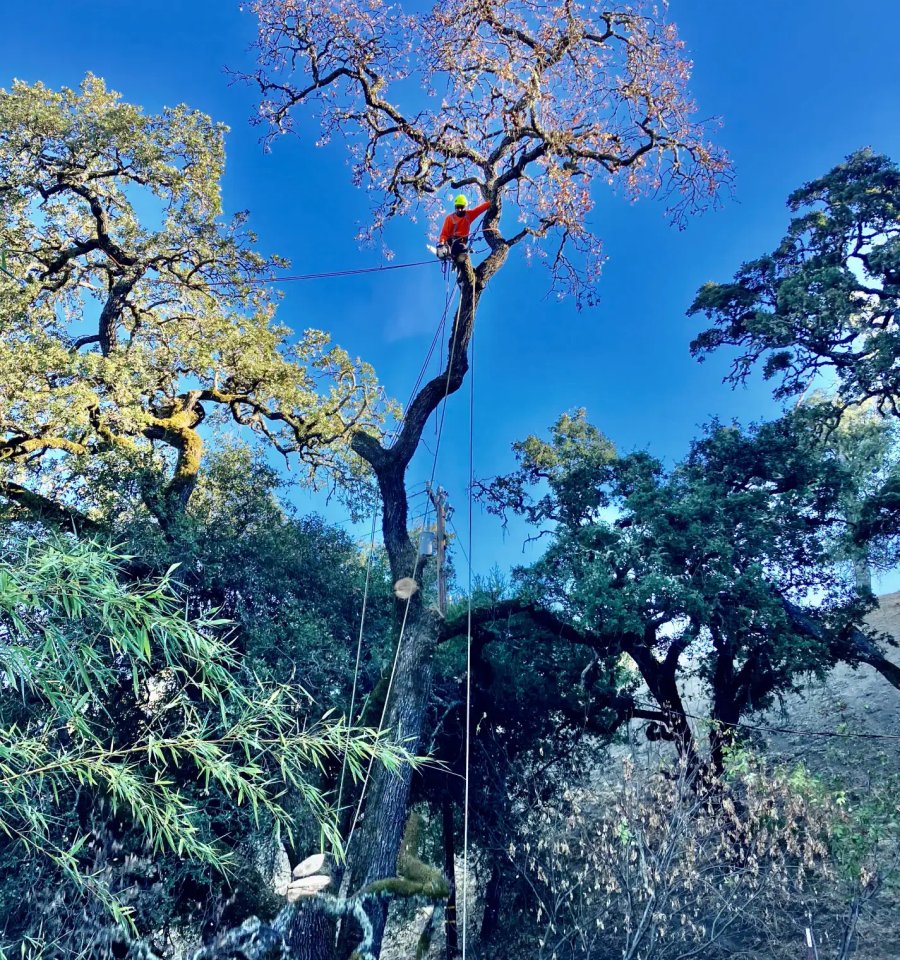
A health assessment is not just for trees that look sick. It is also helpful for valuable shade trees, old oaks, redwoods near homes, trees growing close to hardscape, and trees that went through drought, fire, heavy pruning, construction, or storm damage. The goal is to catch issues early and build a care plan that fits the tree and the property.
We look at the canopy, leaf color, branch growth, trunk, root flare, soil, watering, drainage, and nearby site conditions. Then we explain what we see in plain language. If the tree needs pruning, deadwood removal, root zone care, monitoring, or removal, we will tell you clearly and honestly.
- Tree health review for oaks, redwoods, pines, firs, ornamentals, and mature landscape trees
- Assessment of canopy growth, deadwood, trunk condition, roots, soil, and site stress
- Helpful before construction, pruning, removal decisions, or property maintenance planning
- Practical recommendations for care, preservation, monitoring, or tree work
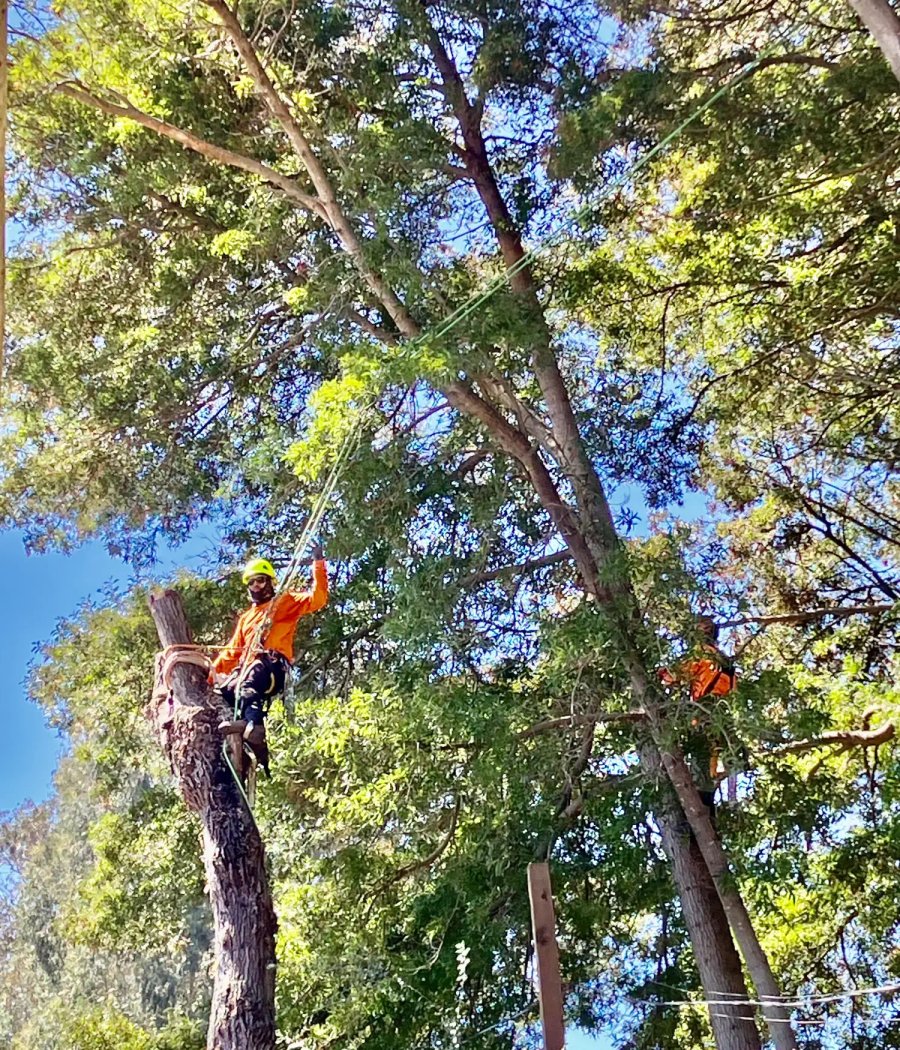
Healthy Trees Are Easier to Maintain Than Declining Trees
Small problems are easier to fix before they become large dead limbs, root failure, decay, or removal work. A health assessment helps you stay ahead of the damage.
What We Check During a Tree Health Assessment
A tree's health depends on more than green leaves. We review the whole tree and the growing space around it so the recommendation fits the real problem.
Canopy Density & Leaf Color
We look at leaf size, leaf color, canopy thinning, early leaf drop, and how much live growth the tree is putting out. A thin or uneven canopy can point to drought stress, root trouble, disease, poor pruning history, or normal decline. If the symptoms are unclear, tree diagnostics may help narrow down the cause.
Deadwood & Branch Dieback
Some deadwood is normal, but heavy dead branches or top dieback may mean the tree is under stress. We check where the deadwood is located and whether it creates a risk over homes, driveways, patios, fences, or walkways. If needed, deadwood removal can make the tree safer while we monitor its condition.
Root Zone and Soil Conditions
Roots need air, space, and the right soil conditions. Compacted soil, grade changes, buried root flares, poor drainage, and hardscape over roots can all hurt tree health. For trees with compacted or stressed root zones, root aeration may be part of the care plan.
Trunk Condition & Decay Signs
We check for cracks, cavities, bark loss, wounds, fungal growth, soft wood, and signs that decay may be present. Some trunk wounds can close over time. Others create long-term weakness. If decay or structure becomes a safety concern, a tree risk assessment may be the next step.
Site Stress Around the Tree
Trees often struggle because of what changed around them. New concrete, trenching, landscape work, irrigation changes, soil added over roots, or heavy equipment can stress a tree even if the damage is not obvious. If the property has changed recently, a site evaluation can help connect those changes to tree health.
Long-Term Care Needs
Some trees need one-time work. Others need a care plan. Mature oaks, redwoods, and large trees near structures may benefit from routine inspections, careful pruning, soil care, and protection during construction. For high-value trees, our tree preservation service can help protect them long term.



We Build the Recommendation Around the Tree, Not a One-Size-Fits-All Answer
Some tree companies look at a declining tree and jump straight to removal. That may be the right call sometimes, but not always. A health assessment gives us a better picture before that decision is made. We look at the tree's condition, the value of the tree, the risk around it, and whether care could reasonably improve the situation.
If the tree is worth keeping, we may recommend selective pruning, deadwood removal, mulch, watering changes, root zone improvements, or ongoing monitoring. If the tree is unsafe or too far declined, we will explain why removal may be the better choice. If disease appears to be the main issue, we may recommend tree disease diagnosis for a more focused review.
- Condition check: We inspect canopy, trunk, roots, soil, and visible stress signs.
- Tree value: We consider shade, privacy, slope support, age, species, and property impact.
- Risk review: We look at what the tree could hit if it fails or drops large limbs.
- Care plan: We recommend practical steps that match the tree's actual condition.
- Honest advice: We tell you when a tree can be managed and when it is time to remove it.
Want to know if your tree is healthy, declining, or worth saving? Call SRT Forestry for a tree health assessment in Santa Rosa or Sonoma County.
Call NowTree Health Assessment Questions in Santa Rosa
Common questions from property owners who want to understand the condition of their trees and what to do next.
How often should mature trees be assessed?
For large trees near homes, driveways, roads, or regular foot traffic, a health assessment every few years is a good idea. It is also smart after storms, drought periods, fire exposure, construction, trenching, or major pruning. Older trees and high-value trees benefit from regular checks because small issues are easier to manage early.
Can a tree look green and still be unhealthy?
Yes. A tree can still have green leaves while dealing with root damage, trunk decay, poor structure, soil compaction, or early decline. Leaves are one clue, but they do not tell the whole story. That is why we also check the trunk, branches, roots, soil, and growing space.
Will a health assessment tell me if the tree needs removal?
Yes, it can help with that decision. If the tree is healthy enough to keep, we will explain what care may help. If the tree is unsafe, severely declining, or too damaged to manage, we will explain why removal may be the best option. The goal is to make the decision clear instead of guessing.
Is this different from a tree inspection?
They overlap, but a tree health assessment focuses more on the tree's condition, stress signs, care needs, and long-term outlook. A tree inspection may be broader or more safety-focused depending on the reason for the visit. If you already know the tree has a specific problem, diagnosis or risk assessment may be a better fit.
Tree Health Assessment and Related Services
Need help with another tree or arborist service? SRT Forestry serves Santa Rosa and nearby Sonoma County communities.